Why the Best Villains Aren’t Just Evil: The Sins vs. Virtues Framework

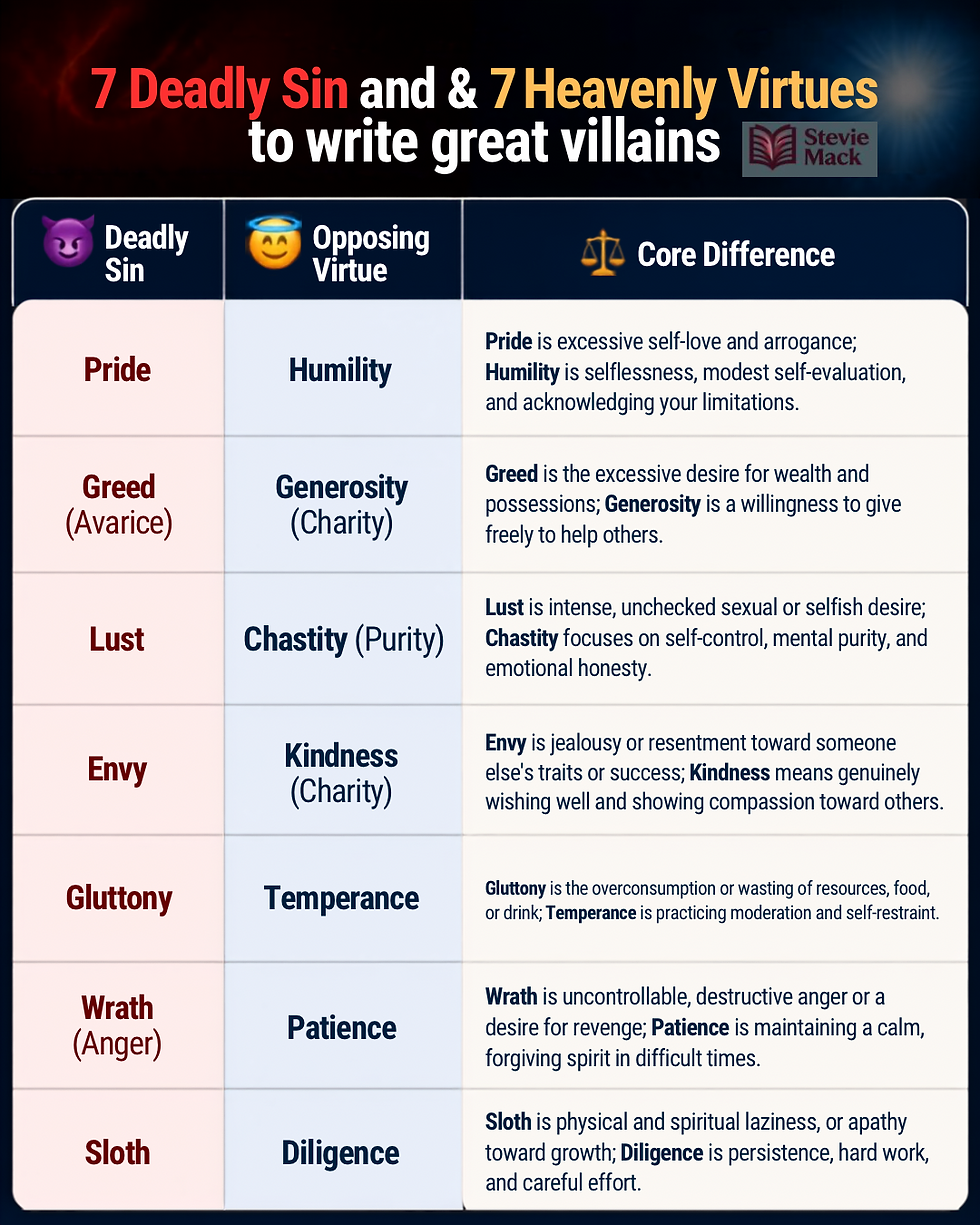
A villain who is bad simply for the sake of being bad rarely leaves a mark. Cackling in the shadows, kicking puppies, and striving for vague world domination might fill plot space, but it won’t drive the protagonist wild.
The most interesting antagonists don’t just oppose the world they exist in direct philosophical and personal conflict with what the protagonist wants. Think of Ariel and Ursula: Ariel deepest desire is voice, autonomy, and genuine romantic connection; Ursula weaponized predatory contracts, silence, and emotional manipulation to strip that exact agency away. Consider Batman and the Joker: Batman was fixated on imposing rigid order, rule of law, and restraint on a broken city, while the Joker is total, deliberate nihilism designed to prove that order is an illusion.
When your antagonist targets the exact moral foundation of your hero, every clash feels deeply personal. A reliable way to build this dynamic into your story is simple: identify the core virtue your protagonist lives by and hand your villain the exact opposing sin.
The key to keeping this grounded rather than Disney is subtlety. Here is how each of the seven pairings plays out on the page.
1. Humility vs. Pride
The Protagonist (Humility): Knows their limits, listens to others, and acts not for personal glory but because it is right. They don’t mind staying behind the scenes if the job gets done.
The Antagonist (Pride): Driven by an inflated sense of superiority, status, and control.
The Subtle Execution: Avoid the mustache-twirling narcissist. Make the villain someone whose pride manifests as benevolent condescension: a mentor, politician, or partner who believes they alone know what is best for everyone. Their conflict with the humble protagonist stems from irritation: they cannot stand someone who doesn’t crave the spotlight or who dares to question their absolute authority.
2. Generosity (Charity) vs. Greed (Avarice)
The Protagonist (Generosity): Believes resources, opportunities, and empathy are meant to be shared freely. They operate from a mindset of abundance and communal care (like Robin Hood).
The Antagonist (Greed): Defined by hoarding, transaction, and an endless appetite for more whether wealth, influence, or attention.
The Subtle Execution: Greed doesn’t have to look like a cartoon miser hoarding gold coins. Frame it as transactional entitlement: the villain keeps score in relationships, viewing affection, favors, and support as currency to trade rather than gifts to give. They attack the protagonist by proving that selflessness is ‘naive’ and trying to force the protagonist into debt.
3. Chastity (Purity) vs. Lust
The Protagonist (Chastity/Purity): Values emotional honesty, clear boundaries, and integrity. In fiction, this is less about strict asceticism and more about deep sincerity and respect for others as complete human beings.
The Antagonist (Lust): Consumed by unchecked appetite, instant gratification, and the impulse to objectify and consume people or experiences for quick self-satisfaction.
The Subtle Execution: Ground lust in emotional exploitation. The antagonist treats people as accessories to their own desires, using charm, seduction, or emotional leverage to get what they want in the moment without considering the wreckage left behind. The conflict sparks when the protagonist refuses to play along with superficial games or compromises their emotional boundaries.
4. Kindness vs. Envy
The Protagonist (Kindness): Genuinely celebrates the success of others, acts with compassion, and meets cruelty with warmth.
The Antagonist (Envy): Tormented by comparison. They cannot tolerate another persons happiness, talent, or peace because they view it as an indictment of their own perceived deficits.
The Subtle Execution: An envious villain rarely says, “I hate you because you are pretty and liked.” Instead, they use passive-aggressive micro-aggressions, subtle sabotage, and whisper campaigns disguised as “concern.” They smile to the protagonists face while methodically undermining their confidence because they cannot bear the protagonist’s effortless ease.
5. Temperance vs. Gluttony
The Protagonist (Temperance): Values balance, self-restraint, and sustainable living. They know when enough is enough and prioritize long-term stability over short-term thrills.
The Antagonist (Gluttony): Defined by excess, wastefulness, and an inability to say “no” to their impulses, consuming energy, praise, or resources without care for depletion.
The Subtle Execution: Look past literal food or drink. A modern gluttonous antagonist is often an attention or power addict ”someone who monopolizes every room, burns through collective resources to fuel their latest vanity project, and leaves exhaustion in their wake. They clash with the temperate protagonist by dragging them into chaos, demanding total emotional availability, and mocking their discipline as boring.
6. Patience vs. Wrath (Anger)
The Protagonist (Patience): Enduring, forgiving, and capable of keeping a clear head under pressure. They believe time and understanding resolve what force cannot.
The Antagonist (Wrath): Ruled by grievance, retaliatory impulses, and destructive outbursts.
The Subtle Execution: The most dangerous wrath is cold, patient, and methodical revenge. The antagonist feels genuinely wronged by past events and believes their scorched-earth tactics are righteous retribution. The patient protagonist becomes their ultimate target because refusal to lash back denies the villain the validation of their rage.
7. Diligence vs. Sloth
The Protagonist (Diligence): Relentless, intentional, and invested in steady personal and spiritual growth. They put in the unglamorous groundwork day after day.
The Antagonist (Sloth): Defined by chronic apathy, emotional avoidance, cynicism, and refusal to take responsibility for their life or community.
The Subtle Execution: Sloth is at its most toxic when masked as world-weary ‘realism.’ The villain isn’t just lying on the couch; they are actively draining the energy of everyone around them, arguing that effort is pointless, systems can’t be fixed, and caring makes you a sucker. The protagonists drive to make things better acts like a mirror the villain hates looking into, leading them to actively sabotage the hero’s work just to prove that defeat is inevitable.
When you design your villain not just to be an obstacle in the road, but the philosophical antithesis of your protagonists heart, every dialogue exchange carries weight. The struggle stops being just about who wins the physical fight, and becomes about which way of moving through the world survives.
Which pairing are you currently exploring in your draft?


Comments